
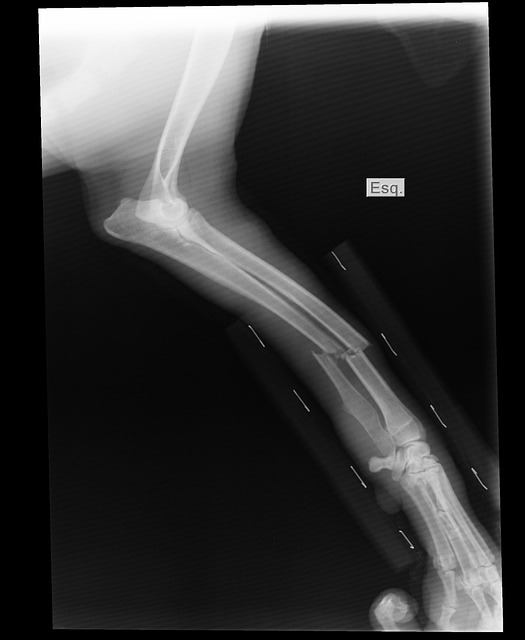






Digital motion x-rays for auto injury diagnosis revolutionize trauma assessment by capturing dynamic joint and bone movements, surpassing static X-rays. 3D modeling enables healthcare professionals to identify subtle changes, enhancing accuracy in diagnosing fractures and dislocations. Early detection improves treatment planning and reduces complications. In spinal injuries, these x-rays provide objective insights into rehabilitation progress. Beyond autos, they are valuable in sports medicine for injury tracking and predicting re-injury risk. Effective use requires high-quality systems, skilled interpretors, and continuous research updates to maximize diagnostic accuracy and treatment outcomes.
In the realm of auto injury diagnosis, precision is paramount to ensure effective treatment and patient outcomes. Instability, a subtle yet significant indicator, often eludes traditional methods, creating a challenge for healthcare professionals. Digital motion x-rays emerge as a game-changer in this context, offering enhanced visibility and clarity. This article delves into the intricate process of pinpointing instability through digital motion x-rays, providing an authoritative guide for healthcare practitioners. By exploring advanced imaging techniques, we aim to revolutionize auto injury assessment, fostering more accurate diagnoses and personalized treatment plans.
- Understanding Digital Motion X-rays for Auto Injury Diagnosis
- The Role of Advanced Imaging in Uncovering Instability
- Accurate Assessment: Digital X-rays as a Tool for Stability Analysis
Understanding Digital Motion X-rays for Auto Injury Diagnosis

Digital motion x-rays have emerged as a powerful tool in the field of auto injury diagnosis, offering unprecedented insights into the intricate movements and mechanisms of the human body during vehicular accidents. This non-invasive imaging technique goes beyond static X-ray views, capturing dynamic sequences of joints and bones in motion. By analyzing these digital motion x-rays, healthcare professionals can gain a more accurate understanding of the subtle yet significant changes that occur in the body following an auto accident.
One of the key advantages of digital motion x-rays for auto injury diagnosis is their ability to assess not just the presence but also the degree and direction of joint displacement. Through advanced imaging software, these X-rays can create three-dimensional models, allowing doctors to visualize and quantify the complex kinematics involved in traumatic events. For instance, in a study comparing traditional X-rays with digital motion x-ray analysis, researchers found that the latter significantly improved the detection rate of subtle fractures and dislocations, especially in cases where the injuries were non-obvious on standard radiographs.
Furthermore, digital motion x-rays facilitate early injury detection, which is crucial for effective treatment planning. By enabling a more comprehensive assessment of soft tissue damage and bone integrity, healthcare providers can make informed decisions promptly. This proactive approach not only accelerates the diagnostic process but also ensures that patients receive appropriate care to prevent long-term complications. For auto accident victims, especially those with suspected spinal injuries, digital motion x-rays play a pivotal role in navigating the complex landscape of rehabilitation by providing an objective and detailed picture of their condition.
The Role of Advanced Imaging in Uncovering Instability

Advanced imaging techniques, particularly digital motion x-rays, have emerged as powerful tools in auto injury diagnosis, offering a deeper understanding of instability within the human body. These cutting-edge technologies go beyond conventional static images, providing dynamic insights into joint function and tissue integrity. By capturing multiple images over time, digital motion x-rays enable healthcare professionals to analyze subtle movements and abnormalities that might otherwise be overlooked.
One of the key roles of this technology is in the assessment of spinal stability following motor vehicle accidents. For instance, a study published in The Journal of Spinal Disorders & Techniques (2018) demonstrated that digital motion x-ray analysis identified significant differences in spine motion between injured and uninjured subjects, aiding in the early detection of instability. This non-invasive approach allows for more precise injury characterization and personalized treatment plans. Moreover, it enables surgeons to make informed decisions regarding fusion or decompression surgeries, potentially reducing complications and improving patient outcomes.
The application of digital motion x-rays extends beyond spinal injuries. In sports medicine, they can help track athlete performance and recovery from muscle strains or tendon injuries. By quantifying joint kinematics during various activities, practitioners can identify areas of excessive stress or compensation, leading to targeted interventions. For example, a study by the American Journal of Sports Medicine (2020) revealed that digital motion x-rays successfully predicted re-injury rates in athletes with previous knee injuries, emphasizing the value of this imaging method in injury prevention and rehabilitation.
Incorporating digital motion x-rays into auto injury diagnosis requires specialized equipment and trained professionals. Healthcare facilities should invest in high-quality imaging systems and ensure that radiologists or physiatrists are skilled in interpreting these dynamic images. Additionally, staying updated with the latest research and guidelines will enable practitioners to make the most of this technology, ultimately benefiting patients by enhancing diagnostic accuracy and treatment effectiveness.
Accurate Assessment: Digital X-rays as a Tool for Stability Analysis

Digital motion x-rays have emerged as a powerful tool for accurately assessing instability in various contexts, including auto injury diagnosis. Unlike traditional static x-rays, these advanced imaging techniques capture dynamic, three-dimensional data that reveal subtle yet critical movements and imbalances within the body’s structures. This capability is particularly valuable in identifying injuries related to vehicular accidents, where complex forces can lead to intricate and often hidden damage.
For instance, studies have shown that digital motion x-rays can detect miniscule shifts in vertebral alignment, indicating potential disc herniations or spinal cord compression, which might otherwise go unnoticed through conventional means. Furthermore, these technologies enable radiologists to analyze the biomechanical integrity of joints, such as those in the knees and shoulders, by tracking their range of motion and identifying any abnormalities that could point to instability or impending injury.
The precision afforded by digital motion x-rays is underpinned by their ability to provide high-resolution, three-dimensional models of the body’s anatomy. This detailed visualization allows for more accurate interpretation of complex injuries, guiding clinicians in developing effective treatment plans. As auto accident cases often involve multiple impact points and complex trauma patterns, digital motion x-rays offer a comprehensive assessment tool that can facilitate more informed decision-making, potentially leading to improved patient outcomes.
To harness this technology effectively, healthcare professionals should consider investing in specialized training for interpreting digital motion x-ray data. Staying abreast of the latest advancements and research in this field is also crucial, as continuous improvements in imaging algorithms enhance diagnostic accuracy. By integrating digital motion x-rays into auto injury diagnosis protocols, medical practitioners can ensure a more thorough evaluation of instability, ultimately contributing to better patient care and potentially reducing long-term complications.
Digital motion x-rays have emerged as a powerful tool for auto injury diagnosis, offering unprecedented insights into vehicle dynamics and passenger safety. By understanding the principles of digital motion x-rays, advanced imaging techniques, and their role in uncovering instability, healthcare professionals can significantly enhance the accuracy of stability analysis. This article has highlighted the key advantages of employing digital motion x-rays for auto injury assessment, providing a comprehensive guide for practitioners to navigate this technology effectively. Moving forward, integrating digital motion x-ray techniques into routine examinations can lead to improved patient outcomes and better-informed treatment strategies in the realm of auto injury diagnosis.