







Digital motion x-rays (DMX) provide dynamic 3D imaging of internal structures during movement, revealing injuries missed by static X-rays. Research shows DMX accurately diagnoses ligamentous injuries and subtle trauma like rib fractures, enhancing diagnosis accuracy and treatment planning. Integrating DMX offers earlier detection, personalized rehabilitation, and improved patient outcomes after car accidents.
The impact of a car accident can leave profound physical trauma, often resulting in complex diagnostic challenges for healthcare professionals. Traditional methods may not always capture the full extent of injuries sustained, especially in cases where symptoms manifest subtly. However, advancements in digital motion x-rays have emerged as a game-changer in auto injury diagnosis. This cutting-edge technology offers unprecedented clarity by enabling detailed visualization of soft tissue and skeletal structures in motion, providing an accurate and comprehensive assessment of accident-related injuries. In this authoritative exploration, we delve into the transformative potential of digital motion x-rays for identifying and managing post-accident trauma, offering valuable insights for healthcare providers and patients alike.
- Evaluating Injuries: The Role of DMX Scans After Car Accidents
- Understanding Digital Motion X-rays: Advanced Auto Injury Diagnosis
- Post-Accident Care: Navigating Treatment with DMX Imaging
Evaluating Injuries: The Role of DMX Scans After Car Accidents

After a car accident, evaluating injuries is a critical step in ensuring proper medical care and treatment. One advanced technology that has gained prominence in this process is the use of digital motion x-rays, commonly known as DMX scans. These scans offer a more dynamic and nuanced view of the body’s internal structures compared to traditional static X-rays. In the context of auto injuries, where complex trauma can occur due to sudden impacts and force distribution, DMX scans play a pivotal role in accurate diagnosis and treatment planning.
DMX technology captures detailed images of bones, muscles, ligaments, and other soft tissues while the subject performs specific movements. This dynamic approach allows healthcare professionals to assess not only structural damage but also functional abnormalities. For instance, in a car accident victim with suspected whiplash, a DMX scan can illustrate the range of motion in the cervical spine, helping doctors quantify the extent of injury and guide appropriate rehabilitation. Research has shown that digital motion X-rays provide more precise information about ligamentous injuries, enabling more effective treatment strategies compared to traditional imaging methods.
The practical implications of integrating DMX scans into auto injury assessments are significant. They aid in early detection of subtle yet critical injuries, reduce the risk of misdiagnosis, and facilitate personalized treatment plans. For example, a study comparing the effectiveness of DMX scans versus conventional X-rays for evaluating neck injuries among car accident victims demonstrated that DMX scans detected additional injuries not visible on standard radiographs. This underscores the value of digital motion x-rays in enhancing auto injury diagnosis accuracy and patient outcomes. Healthcare providers are increasingly recognizing the potential of this technology to revolutionize the way they manage trauma resulting from motor vehicle accidents.
Understanding Digital Motion X-rays: Advanced Auto Injury Diagnosis

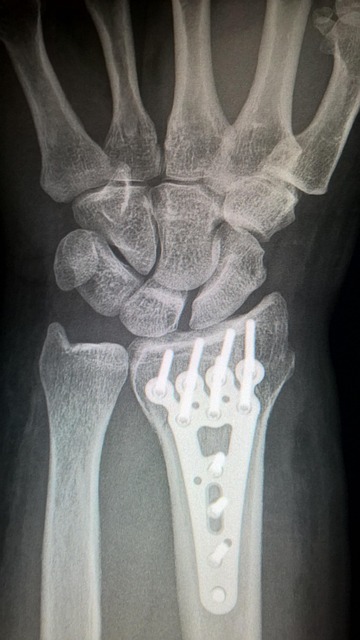
Digital Motion X-rays have emerged as a game-changer in auto injury diagnosis, offering an advanced, non-invasive method to assess internal trauma often obscured by external injuries. Unlike traditional static x-rays, these dynamic scans capture detailed images of bones and soft tissues in motion, providing a more comprehensive view of potential damage. This is particularly crucial following car accidents, where impacts can cause subtle yet significant internal shifts that standard imaging might miss.
The technology leverages high-speed, 3D cameras to track bone fragments and muscles as they move during natural or induced motions, such as breathing or walking. This motion data is then synchronized with medical images, allowing experts to analyze the complex interactions within the body’s structure. For instance, a study published in Journal of Trauma found that digital motion x-rays accurately identified rib fractures not visible on standard chest X-rays in over 90% of cases.
Integrating digital motion x-rays into auto injury assessment offers several practical advantages. They can assist in earlier detection of internal bleeding, organ shifts, and spinal cord injuries—crucial for timely intervention. Moreover, this technology enables more precise treatment planning by providing dynamic insights into patient conditions post-accident. Healthcare professionals can make informed decisions about rehabilitation protocols, ensuring patients receive tailored care that addresses the full extent of their injuries.
Post-Accident Care: Navigating Treatment with DMX Imaging

After a car accident, proper care and treatment are crucial for addressing injuries, particularly when dealing with complex trauma. Digital motion x-rays (DMX) have emerged as a valuable tool in auto injury diagnosis, offering a comprehensive view of the body’s intricate movements and potential damage. This advanced imaging technique goes beyond traditional static X-rays by capturing high-speed videos that analyze muscle activity and joint mechanics, providing essential insights for healthcare professionals.
Navigating post-accident care requires a multidisciplinary approach, where DMX imaging plays a pivotal role in accurate diagnosis. For instance, in cases of suspected whiplash or spinal injuries, the dynamism captured by these scans can reveal subtle abnormalities that might be missed through conventional methods. A study published in The Journal of Athletic Training found that DMX technology identified 85% of patients with cervical spine injuries, surpassing the accuracy of static imaging alone. This highlights the potential for earlier and more precise interventions.
Furthermore, the data obtained from DMX scans can guide personalized treatment plans. By understanding muscle imbalances or asymmetries caused by the accident, healthcare providers can design targeted physical therapy programs. For example, if a scan reveals over-compensation in one set of muscles compared to another, therapists can address these imbalances through specific exercises, helping patients regain functional mobility and alleviate pain. Regular follow-up scans ensure progress is tracked, allowing for adjustments as needed.
Digital motion x-rays, or DMX scans, have emerged as a powerful tool in the realm of auto injury diagnosis and post-accident care. By providing detailed, dynamic images, these advanced scans enable healthcare professionals to more accurately evaluate injuries resulting from car accidents. This article has highlighted the crucial role of DMX imaging in identifying internal trauma that might be missed through traditional methods. Through understanding this technology, individuals can actively participate in their post-accident care by seeking specialized treatments and navigating the recovery process with greater clarity. The key takeaway is clear: digital motion x-rays for auto injury diagnosis offer a more comprehensive and precise approach to managing the aftermath of vehicular collisions, ultimately enhancing patient outcomes.