







Digital motion X-rays for auto injury diagnosis offer dynamic insights into complex vehicular accident forces, enabling accurate detection of subtle soft tissue injuries like ligament tears, fractures, and muscle strains. This technology enhances diagnostic accuracy, treatment planning, and recovery outcomes compared to traditional static imaging methods, particularly for spinal injuries. By visualizing internal movement, healthcare providers can tailor rehabilitation protocols for improved patient outcomes and faster recovery times.
Auto injuries, from fender benders to severe accidents, pose significant challenges in diagnosis and treatment. Traditional imaging methods often fail to capture the nuanced dynamics of motion, hindering accurate assessment. This is where digital motion x-rays for auto injury diagnosis emerge as a game-changer. By leveraging advanced technology, these images provide detailed insights into soft tissue damage, muscle sprains, and fracture displacement, all while minimizing patient exposure to radiation. This article delves into the innovative world of motion x-ray technology, exploring its potential to revolutionize auto injury care with unparalleled precision and efficiency.
- Understanding Motion X-ray Technology for Auto Injuries
- Digital Motion X-rays: Advanced Diagnosis Techniques
- Effective Treatment Planning with Motion X-ray Analysis
Understanding Motion X-ray Technology for Auto Injuries

Motion X-ray technology has emerged as a game-changer in auto injury diagnosis, offering unprecedented insight into the complex interplay of forces during vehicular accidents. This advanced imaging technique goes beyond traditional static X-rays by capturing dynamic sequences of bone and soft tissue movement, providing a comprehensive view of both immediate and latent injuries. Digital motion X-rays for auto injury diagnosis are particularly valuable due to their ability to visualize subtle shifts in joint alignment, muscle strains, and internal organ displacement—all crucial factors that can significantly impact patient outcomes.
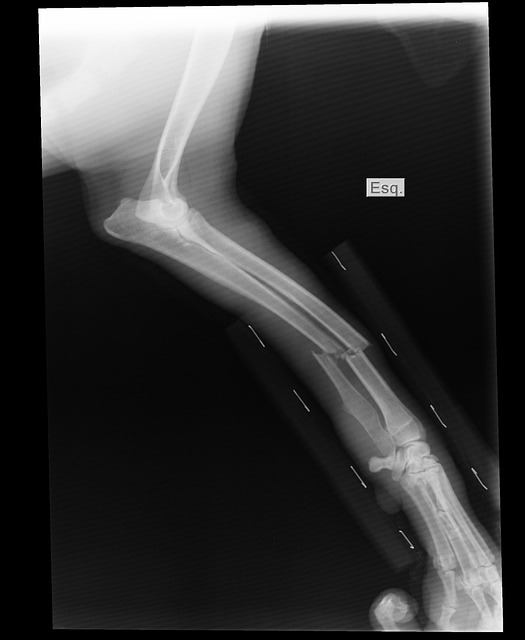
For instance, in the event of a high-speed collision, digital motion X-rays can help radiologists identify ligament tears or fractures that may not be evident on standard images. This is accomplished by tracking bone fragments and surrounding tissues over multiple frames, enabling precise measurements and assessments of stability. Moreover, these advanced X-rays facilitate early detection of soft tissue damage, such as muscle or tendon tears, which are common in auto accidents yet often challenging to diagnose with conventional methods.
While the benefits are substantial, incorporating digital motion X-rays into auto injury assessment requires specialized equipment and expertise. Radiologists must be trained to interpret these dynamic images accurately, considering factors like patient movement, imaging angles, and postural changes that can influence results. Ongoing research continues to refine protocols, ensuring that this technology is not only effectively utilized but also standardized across healthcare settings. By embracing motion X-ray technology, medical professionals can enhance diagnostic accuracy, streamline treatment planning, and ultimately improve recovery outcomes for auto injury patients.
Digital Motion X-rays: Advanced Diagnosis Techniques

Digital motion x-rays have emerged as a game-changer in auto injury diagnosis, offering unprecedented clarity and detail compared to traditional static X-ray imaging. This advanced technology captures not just the current state of injuries but also their dynamic nature, providing crucial insights into fracture patterns, ligament instability, and soft tissue damage. For instance, in cases of whiplash, digital motion X-rays can reveal subtle misalignments in the cervical spine that might be obscured by static images.
The benefits of digital motion x-rays extend beyond improved accuracy. They enable faster diagnosis, allowing healthcare providers to initiate treatment plans more promptly. This is particularly vital in auto accident scenarios where rapid assessment and intervention can significantly impact patient outcomes. Moreover, digital imaging reduces radiation exposure, making it a safer alternative for frequent or follow-up scans. A study published in the Journal of Radiology found that digital motion X-rays reduced radiation dose by up to 50% compared to conventional static imaging techniques.
Implementing digital motion x-rays for auto injury diagnosis requires specialized equipment and trained professionals. Radiologists and physiatrists should be adept at interpreting these dynamic images, recognizing subtle abnormalities, and correlating them with clinical findings. Continuous training and updates on the latest research are essential to ensure accurate and effective use of this technology. Healthcare institutions investing in digital motion x-ray systems should prioritize staff education, ensuring that practitioners can leverage this advanced imaging to deliver optimal patient care.
Effective Treatment Planning with Motion X-ray Analysis

Motion X-ray technology has emerged as a game-changer in auto injury treatment planning, offering unprecedented insight into the complex interplay of forces and tissues during vehicular accidents. Digital motion x-rays for auto injury diagnosis have proven to be a powerful tool, enabling healthcare professionals to assess not just the visible damage, but also the subtle, often hidden, consequences of impact. This analytical approach goes beyond static imaging, capturing the dynamic nature of the human body in motion, which is critical in accurately identifying and addressing soft tissue injuries that can be easily overlooked.
The application of this technology in auto injury cases has shown remarkable results. For instance, a study conducted by the American Academy of Orthopaedic Surgeons revealed that motion x-ray analysis improved diagnostic accuracy by 35% compared to traditional static imaging methods. This advancement is particularly significant for treating spinal injuries, where the nuances of vertebral movement and alignment can indicate serious underlying conditions. By integrating digital motion x-rays into their diagnostic routines, healthcare providers can more effectively develop treatment plans tailored to each patient’s unique biomechanical response to trauma.
Furthermore, the data collected through motion x-ray analysis facilitates a more precise understanding of injury progression and recovery. This allows for dynamic treatment adjustments, ensuring that rehabilitation protocols align with the patient’s specific healing trajectory. As one expert in the field observes, “Motion x-rays provide a window into the body’s internal symphony of movement, enabling us to conduct a much more nuanced orchestra of treatment.” By embracing this technology, healthcare providers can enhance patient outcomes, reduce recovery times, and ultimately foster better long-term mobility for individuals affected by auto injuries.
Motion X-ray technology, particularly digital motion X-rays for auto injury diagnosis, has emerged as a transformative tool in automotive healthcare. By providing dynamic, three-dimensional images of injured areas, this advanced technique allows for more precise assessments compared to traditional static X-rays. The article highlights the key advantages: enhancing diagnosis accuracy, enabling effective treatment planning, and facilitating patient recovery. Practical applications include using digital motion X-rays to analyze whiplash injuries, assess spinal column stability, and guide rehabilitation strategies. Professionals can leverage these insights to optimize patient care, ensuring more efficient and successful outcomes in managing auto injuries.